From the Soil Health Leadership Program to the Field

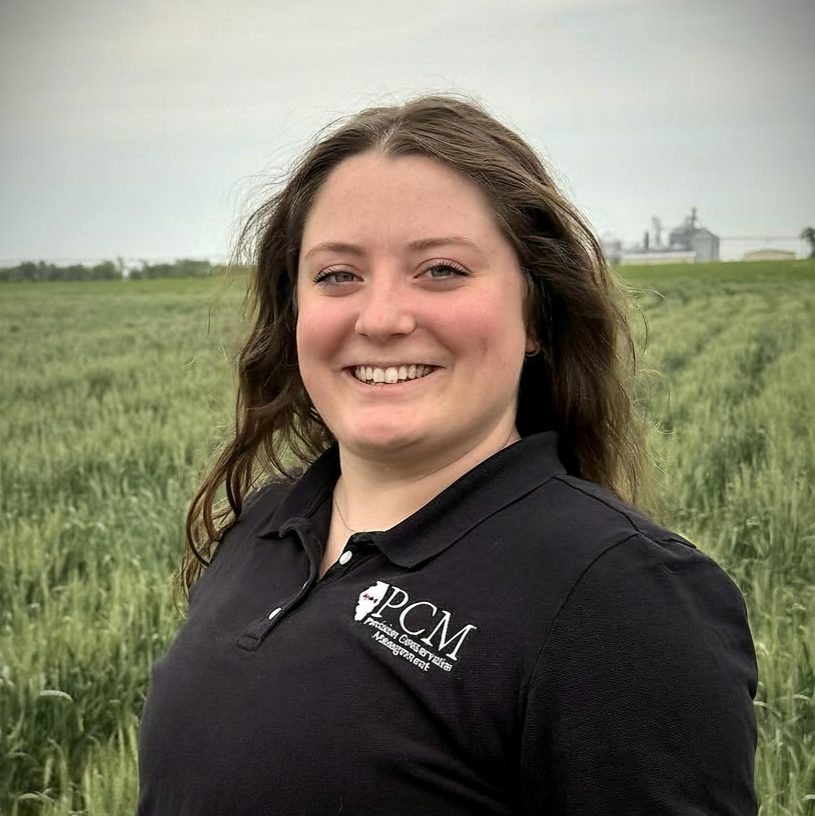
Participating in the first session of the Illinois Sustainable Ag Partnership (ISAP) Soil Health Leadership Program (SHLP) has already sharpened the tools I use every day as a PCM Specialist. Knowing how to match the right practice to the right farm takes careful consideration of serveral factors. With a background in soil science, I came into this program looking for real-world perspectives I could bring back to the farmers I work with in Southeastern Illinois.
The first SHLP session in Peoria grounded the group in the fundamentals of soil health including management principles, fertility, and the biology that drives it all. Presenters including Jim Isermann and Pete Fandel of ISAP and ICC, Rachel Curry of University of Illinois Extension, Talon Becker of Illinois Extension, Laura Lant of Midwest Grass and Forage, and Torey Colburn of American Farmland Trust covered everything from the Nutrient Loss Reduction Strategy to cover crop species selection and soil biology.
A tour of ICC’s research plots (a floating wetland, a bioreactor, a cover crop plot, and an NRCS constructed wetland) with Adrienne Marino of The Nature Conservancy showed how those concepts hold up in the field, and a hands-on session at Pete Fandel’s farm let us test soil health indicators ourselves.
The program has reinforced for me that soil health is more than implementing one specific practice. Cover crops, reduced tillage, and nutrient management need to be tailored for each grower and field, rather than assigned as a one-size fits all solution.
Hearing how different advisors approach that challenge gave me new resources to draw on and a clear picture of what information farmers need when they are considering a practice change: cost, timing, fit with their existing system, and proof that it will pencil out.
That’s exactly the lens I bring to my work as a PCM Specialist. Every new connection and resource from this cohort becomes something I can use the next time I’m sitting down with a farmer to figure out what makes sense for their fields.
I’ve got several more SHLP sessions ahead this year, and I’m looking forward to bringing what I learn straight back to the farmers I serve! If you farm in Southeastern Illinois and are curious what practices are performing best in your fields, I’d welcome the conversation. You can reach out to me directly or find your regional PCM Specialist here.